Tools — Best AI design tools
The best AI design tools in 2026
The best AI design tools in 2026, what each one is genuinely best for, and why every one of them can execute a design but none of them can decide the idea that makes your brand memorable.
On this page
The best AI design tools in 2026 are fast and genuinely useful, but every one of them executes a design rather than deciding the idea behind it. Six tools below, what each is best for, and why memorability is scored 0 to 100, not generated. Safe is a template, and a template is invisible. If it doesn't get remembered, it doesn't ship.
- The best AI design tools split into image generators, in-app AI assistants, and AI site and UI builders. Each speeds up a different part of production.
- AI makes design fast, and fast plus templated trends toward sameness, because everyone draws from the same models.
- A tool can execute a design in seconds. It cannot decide the one idea that makes your brand the one people remember.
- Memorability is a human decision, measured before and after. No tool on this list scores it, so none of them can make you memorable.
What are the best AI design tools in 2026?
You are not here for a feature dump. You are here because AI makes design fast, and you want to know which tool actually helps, without ending up looking like every other AI-built brand.
That is the real tension. AI makes design fast, and fast plus templated trends toward sameness, because the models everyone prompts are the same models, so the output converges on a shared look. The tools are worth using. What they cannot do is decide the idea that sets you apart. The field splits into three kinds:
- Image generators turn a prompt into visuals, moodboards, and production art.
- In-app AI assistants speed up UI, layout, and content work inside a tool you already use.
- AI site and UI builders generate and ship pages or mockups fast.
Each one accelerates production. None of them decides your positioning, and that gap, a fast design with a forgettable brand, is the sameness problem in a new form.
The best AI design tools in 2026
Grouped by the job they are genuinely best for. Every one is strong at execution. The verdict line on each card is the same, because a tool executes a design, it does not make you memorable.
Best for: high-quality generative imagery and moodboards.
Watch for: everyone draws from the same models, so results converge on a look.
Makes you memorable: No, a tool executes
Best for: commercially-safe generative images inside Adobe tools.
Watch for: fast production, but it does not decide your brand idea.
Makes you memorable: No, a tool executes
Best for: speeding up UI and layout work inside Figma.
Watch for: it accelerates production, not positioning.
Makes you memorable: No, a tool executes
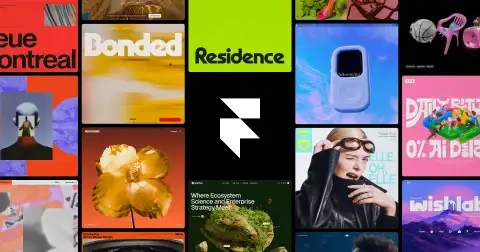
Best for: generating and shipping web pages fast.
Watch for: quick sites that can look like every other AI site.
Makes you memorable: No, a tool executes
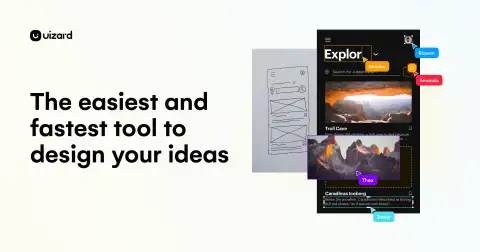
Best for: turning sketches and prompts into UI mockups quickly.
Watch for: drafts, not a distinct brand.
Makes you memorable: No, a tool executes
Best for: templated AI content for small teams.
Watch for: templated plus generative is a fast route to sameness.
Makes you memorable: No, a tool executes
Here is the same field at a glance.
| Tool | Best for | Watch for | Makes you memorable |
|---|---|---|---|
| Midjourney | Generative imagery and moodboards | Results converge on a shared look | No |
| Adobe Firefly | Commercially-safe images in Adobe tools | Fast, but does not decide the idea | No |
| Figma AI | UI and layout work inside Figma | Accelerates production, not positioning | No |
| Framer AI | Generating and shipping web pages fast | Can look like every other AI site | No |
| Uizard | Sketches and prompts into UI mockups | Drafts, not a distinct brand | No |
| Canva Magic Studio | Templated AI content for small teams | Templated plus generative trends to sameness | No |
Want to see where you blend into the AI average? Book your free Brand Clarity Call and get the design direction to stand out.
How to choose an AI design tool
Skip the feature comparison. Here is the real decision, in three moves:
- Match the tool to the job. An image generator buys you visuals. An in-app assistant buys you speed inside a tool you already use. A site builder buys you a page fast. Pick for the task in front of you, not for the longest feature list.
- Decide the idea before you prompt. A tool is only as distinct as the direction you give it. If you have not decided the one thing you want to be remembered for, the model will hand you the category average, faster.
- Use AI for execution, keep the judgement human. The tools are excellent at producing options. They cannot tell you which option your buyer will remember, so keep that call with a person who is deciding on purpose.
Why AI design tools cannot make you memorable
AI executes a design. It does not decide the idea. You can generate a thousand versions of a homepage in an afternoon, and not one of them will tell you which idea is worth owning, because that is a judgement about your market, not a rendering task.
There is a deeper reason the output converges. Everyone draws from the same models, trained on the same design of the last decade, so the results trend toward a shared look. That is the sea of AI sameness, and it is the exact reason a distinct, human brand decision stands out. When every competitor prompts the same tools and lands in the same place, the one brand that decided something on purpose is the one people remember.
That is the gap we built our studio around. We measure whether your brand is remembered, before and after the work, so the lift is the proof rather than a promise. You can see that proof in our case studies.
If your search is broader than AI tools, our memorability glossary defines the outcome that matters, and the best branding tools and best tools for web design breakdowns use the same honest lens. Our branding agency in Singapore page explains how we work as a studio rather than a tool.
Why memorability? Buyers meet more look-alike brands every year and remember fewer of them. The one they recall first is the one they buy, so memorability is the return on design, and the only one you can actually measure.
FAQ
What are the best AI design tools in 2026?
For generative imagery, Midjourney and Adobe Firefly lead. For UI and layout, Figma AI and Uizard. For shipping web pages fast, Framer AI. For templated content, Canva Magic Studio. Each is strong at execution. None of them decides the idea that makes your brand memorable, which is the part a tool cannot do for you.
Can AI make my brand memorable?
No. AI executes a design fast, but a memorable brand is a human decision about what one true thing you own, and AI cannot make that decision for you. It can render the idea once you have it. Memorability is measured, not generated, so we measure your recall before and after the work we ship, see our case studies at unsafe.design/work.
Will AI design tools make everything look the same?
They trend that way, because everyone draws from the same models and the output converges on a shared look. That is not a reason to avoid them; it is the reason a distinct, human brand decision stands out more, not less, in a sea of AI sameness.
Do I still need a designer if I use AI tools?
Yes, for the idea and the judgement AI cannot supply. A tool can produce a hundred variations, but it cannot tell you which one your buyer will remember or why. The designer decides the idea; the tool executes it faster.
Don't be generic. Go unsafe.
Get the AI Branding Playbook, "Make It Feel Like Yours." How to give your AI real design direction so your brand stops looking like the template everyone else ships.
Get the AI Branding PlaybookDon't be generic. Go unsafe.
Book a free Brand Clarity Call. We put your brand next to the AI-average lineup, show you where you blend in, and give your AI tools the design direction to build something unmistakably yours. No pitch.